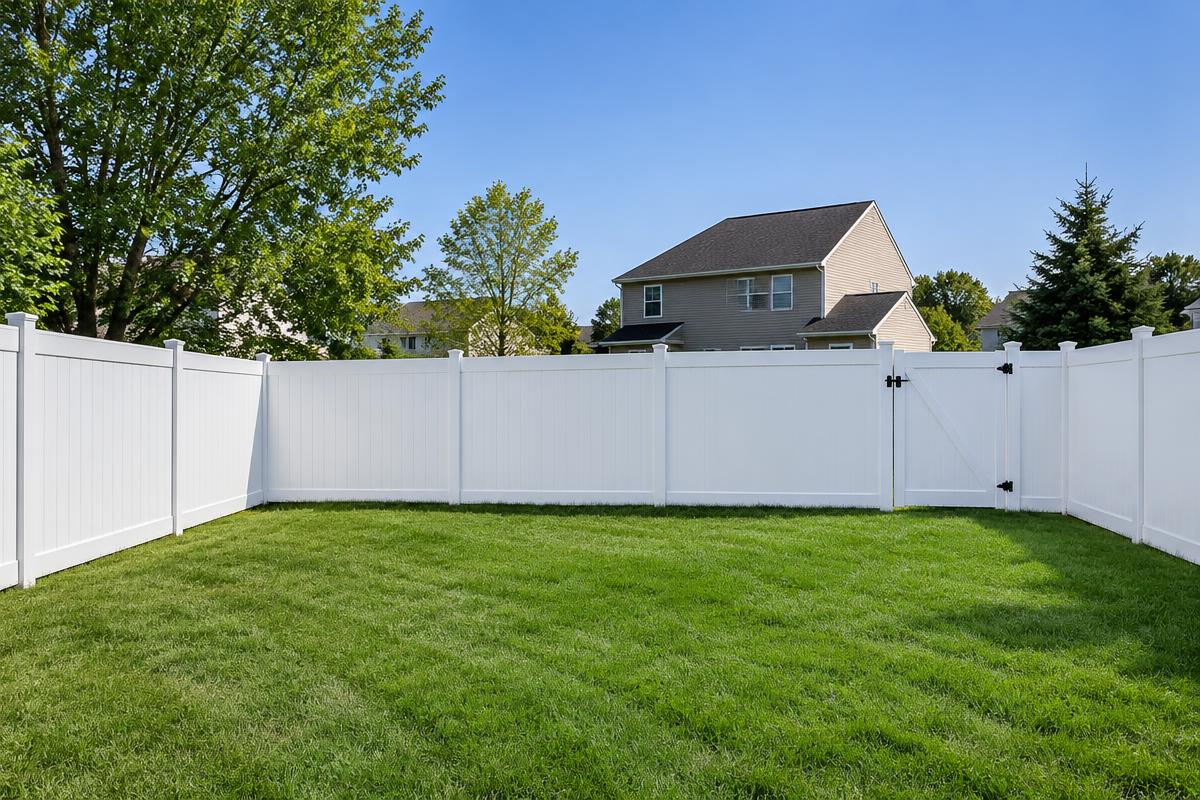
Popular vinyl styles in Delaware
Full privacy panels with tight tongue-and-groove boards are the most common request in New Castle County backyards, where houses sit close together. Semi-privacy panels leave narrow gaps that let a coastal breeze through, which many Sussex County owners like. Picket styles suit front yards and cottage-style beach homes without walling them off.
Lattice-top panels soften a tall privacy run, and post-and-rail vinyl outlines bigger Kent County lots without blocking the view. Ask each installer to show the exact panel and rail profile they're quoting. Two fences both called ‘white privacy vinyl’ can differ a lot in wall thickness and reinforcement.
Colors and finishes
White is still the classic, but tan, clay, gray and wood-grain textures are popular with homeowners who want the fence to blend with siding or dunes. Look at a real sample outdoors in daylight, since color reads differently in the sun. Ask whether matching replacement panels will be easy to get later, and how the written warranty treats fading or discoloration.
Vinyl compared with wood and aluminum
Vinyl skips the staining routine and won't rot or attract insects, but a cracked section can be harder to patch invisibly than a single wood board. Wood costs less up front and is easier to customize, with more upkeep. Aluminum gives an open, decorative look rather than privacy. Weigh appearance, repairs and maintenance together instead of just the first quote. Every material needs some care.
Choosing a height and layout
Start with the job the fence needs to do and the limits that apply to your lot. A taller solid run can screen a deck from the neighbors; a shorter picket defines a front garden. Dogs may need tighter gaps and a gate they can't nose open. For a pool, the material alone doesn't make a fence compliant, so ask the installer to confirm the design and gates meet local code before ordering.
What changes a vinyl fence quote
Footage and height set how much material you need, while panel style, reinforcement and color set the product price. Walk gates, wide driveway gates and upgraded hardware add to the scope. Slopes, tree roots, sandy or wet ground, tight access and tearing out an old fence all add labor. Mark where gates should go and how mowers will get into the yard.
The final price comes from the contractor's on-site quote, because length, height, style and ground conditions all move it. To compare fairly, give every installer the same footage, height and gate count. Look for gates, tear-out, haul-away, permits and site prep listed separately, since a lower total sometimes leaves out work you still need. Ask how changes are approved and billed before anything extra gets charged.
Vinyl at the shore and inland
Near the beach, wind is the bigger test: solid panels catch gusts, so post spacing, post depth and the manufacturer's installation rules matter. In sandy Sussex County soil, ask how deep posts go and how they're set to stay straight. Be wary of anyone promising a fence that will survive every nor'easter.
Inland, cold snaps make vinyl a little more brittle against impacts, and summer sun can shift its color over time. Reinforced gate posts and the right hinges keep gates from sagging under daily use. Ask how sagging gates, loose hardware or storm damage would be handled after the job is done.
Permits, HOAs, property lines and 811
Fence height limits, setbacks and permit requirements vary by county and town across Delaware, so check with your county or town office before you order materials. Many subdivisions, especially newer ones in New Castle County, have an HOA that must approve the style, color and placement first. Installers in our network can explain the usual steps, but agree in writing on who files each application, and wait for approvals before work begins.
An old fence or a neighbor's memory is not a reliable property line. Pull out your survey, and if the line is unclear, talk to a licensed surveyor before posts go in. Call 811 a few business days before digging so Miss Utility can mark public lines, and point out private lines such as irrigation, landscape lighting or power to a shed, which usually aren't marked.
Questions to ask a vinyl installer
Ask for proof of insurance and a current Delaware business license, and check them before you hire. Request a written estimate that names the manufacturer, panel style, height, post-setting method, reinforcement and gate hardware. Who applies for the permit or HOA approval? Who calls Miss Utility? Who removes the old fence and fixes the lawn afterward?
Read the material warranty and the workmanship warranty separately. Ask what's excluded, whether labor is covered and who you call for a repair. Confirm the payment schedule and how surprises underground are handled. Keep the product details with your contract so future repairs or replacements are easier.
How our quote service works
Pick your fence type, rough length, ZIP code and timing, then add your contact details and anything about access or the yard. We pass your request to independent fence installers who serve your part of Delaware. They talk through the project with you and send their own quotes. Compare scope, materials, schedule and terms, ask questions, and hire whoever fits, or nobody. Requesting quotes is free for homeowners and there's no obligation.
Common questions
How long will a vinyl fence last near the beach?
There's no single number. Product quality, wind exposure, how the posts were set and general care all matter. Ask about the specific product's warranty, what it excludes and whether replacement parts are easy to get, rather than treating a warranty term as a promise.
Does vinyl give full privacy?
Solid privacy panels block most direct views. Semi-privacy, picket and rail styles don't. Check the gaps between boards and under the fence, especially where the ground dips.
Do I need a permit for a vinyl fence in Delaware?
It depends on your county or town, where the fence goes and what it's for. Check with your local office before work starts and get HOA approval separately if you have one. Installers can help explain the steps; agree in writing who files the paperwork.
Will vinyl stand up to coastal wind?
A well-made product installed to the manufacturer's specs can do well, but no fence is storm-proof. Solid panels catch more wind than semi-privacy ones. Ask about reinforcement, post depth and whether the system suits your exposure.
How long does installation take?
The work usually takes a day or a few days, depending on length, ground, access and weather. Approvals and material deliveries can push the start date. Ask for an estimated schedule and how delays will be communicated.