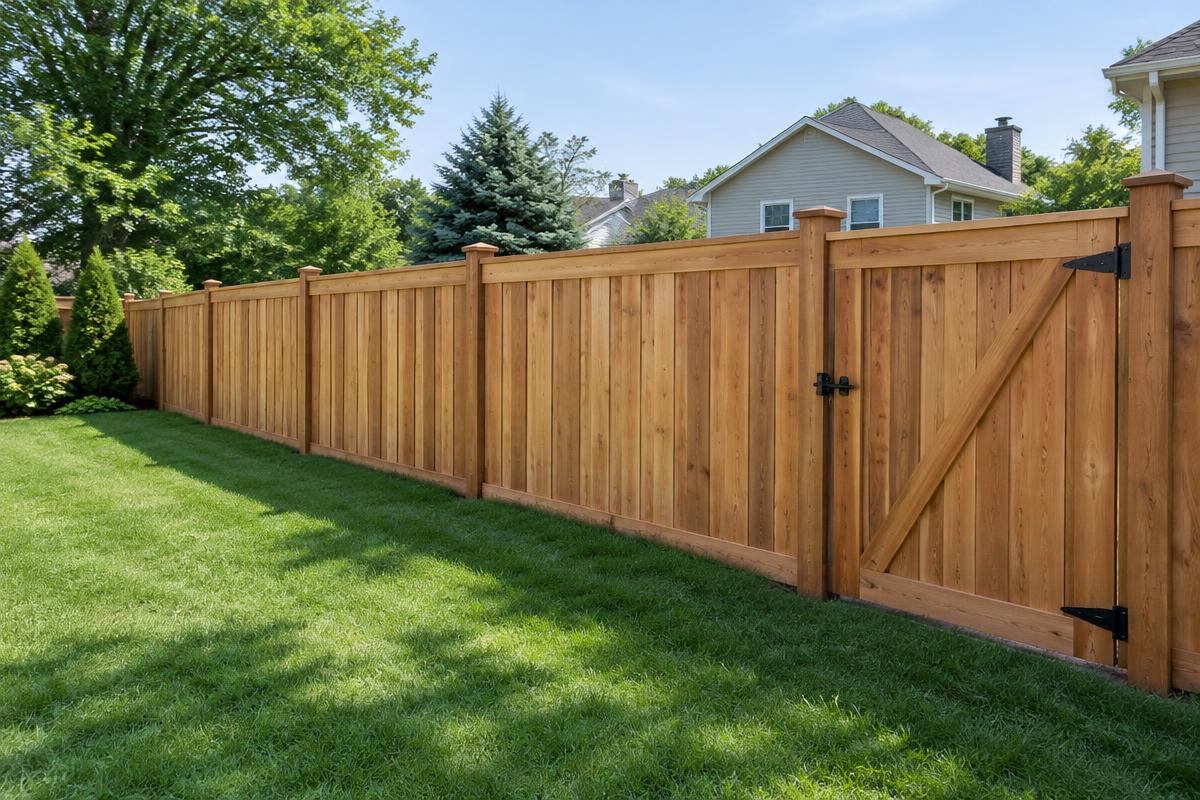
Wood fence styles for Delaware yards
Stockade is a simple, budget-friendly privacy screen of tight vertical boards. Board-on-board overlaps the boards so there are no see-through gaps as the wood shrinks. Shadowbox alternates boards on each side of the rails, which looks good from both sides and lets some air through.
Picket fences suit older homes in towns like New Castle, Milford and Lewes. Split rail is the classic choice for larger lots and can be backed with wire mesh to keep dogs in. Horizontal board fences give a modern look but need careful support and spacing.
Pressure-treated pine or cedar
Pressure-treated pine is the most common choice and holds up well when it's rated for ground contact where it needs to be. It often arrives wet and can twist, check or shrink as it dries. Ask which treatment rating is being used for the posts.
Cedar resists decay naturally and has a warmer look, but it still weathers and isn't rot-proof. Grade, board thickness and post material all affect how long it lasts. It usually costs more than treated pine, though the full design and local supply change the gap.
Farm, split-rail and deer fencing
On bigger lots in Kent County and western Sussex, many owners want to mark the property, keep horses or dogs in, or protect a garden without boxing in the view. Two- and three-rail split rail, post-and-board and wire-backed rail all come up often.
Deer are a real problem in much of the state. A standard four-foot fence won't stop them, so if protecting plantings is the goal, ask installers about taller wire or mesh extensions and which areas actually need them, rather than fencing the whole property at full height.
Staining, sealing and upkeep
Decide whether you want to keep the color with a stain or let the wood weather to gray. Walk the fence once or twice a year looking for loose boards, popped fasteners and gates that drag. Keep mulch, soil and sprinklers off the boards so moisture doesn't sit against them.
New wood has to dry enough before stain or sealer goes on; follow the finish maker's instructions, since freshly treated lumber may need weeks. Plan to recoat as the finish wears rather than on a fixed calendar, and sooner on sunny, exposed or coastal sites.
What changes a wood fence quote
Species, grade, board thickness, height and total footage drive the estimate, and overlapping styles use more lumber than open ones. Gates need proper framing and hardware, especially wide ones for mowers or trailers. Tearing out an old fence, roots, slopes and narrow side yards add work.
The final price comes from the contractor's on-site quote, because length, height, style and ground conditions all move it. To compare fairly, give every installer the same footage, height and gate count. Look for gates, tear-out, haul-away, permits and site prep listed separately, since a lower total sometimes leaves out work you still need. Ask how changes are approved and billed before anything extra gets charged.
Replacing an older wood fence
Many New Castle County homes have fences from the 1990s or 2000s that are leaning, rotting at the base or missing boards. Before you replace one, ask whether the old posts will be pulled and how the concrete footings will be handled, since reusing post holes isn't always possible. Find out whether haul-away is included.
A replacement is also a good moment to rethink the layout. You might add a wider gate, change the height or switch materials on one side. Remember that replacing a fence may still need approval from your town or HOA, so check before you assume it's exempt.
Permits, HOAs, property lines and 811
Fence height limits, setbacks and permit requirements vary by county and town across Delaware, so check with your county or town office before you order materials. Many subdivisions, especially newer ones in New Castle County, have an HOA that must approve the style, color and placement first. Installers in our network can explain the usual steps, but agree in writing on who files each application, and wait for approvals before work begins.
An old fence or a neighbor's memory is not a reliable property line. Pull out your survey, and if the line is unclear, talk to a licensed surveyor before posts go in. Call 811 a few business days before digging so Miss Utility can mark public lines, and point out private lines such as irrigation, landscape lighting or power to a shed, which usually aren't marked.
Questions to ask a wood installer
Check insurance and a current Delaware business license before you hire. Ask the estimate to spell out wood species, grade, treatment, board size, post construction and fasteners. Which side will face the neighbors, and does that meet local and HOA rules? Who applies for approvals, removes the old fence and repairs the lawn?
Talk about normal wood movement and which defects the warranty covers. Ask whether staining is included, when it should happen and who does it. Review gate bracing, latch choice, the payment schedule and how change orders work.
How our quote service works
Pick your fence type, rough length, ZIP code and timing, then add your contact details and anything about access or the yard. We pass your request to independent fence installers who serve your part of Delaware. They talk through the project with you and send their own quotes. Compare scope, materials, schedule and terms, ask questions, and hire whoever fits, or nobody. Requesting quotes is free for homeowners and there's no obligation.
Common questions
How long does a wood fence last in Delaware?
It depends on wood quality, treatment, moisture, construction and upkeep, and posts can age differently from boards. Ask how the design keeps water away from posts and board ends, and read the warranty exclusions rather than expecting a fixed number of years.
Should I choose cedar or pressure-treated pine?
Cedar resists decay naturally and looks warmer. Pressure-treated pine costs less but may need more drying before you finish it. Compare grade, construction and full project quotes; either one still needs care.
Will a split-rail fence keep deer out?
Not on its own. Deer jump standard rail fences easily. If you're protecting a garden, ask about taller mesh or wire around just that area.
Which side of the fence faces my neighbor?
Some towns and HOAs have rules about which side faces out, so check before choosing a layout. Board-on-board and shadowbox look finished on both sides, but that doesn't replace approval.
Do I need a permit for a wood fence in Delaware?
Rules vary by county, town and HOA, including height and placement. Check with your local office before work starts. Installers can help with the process, but don't assume a replacement fence is automatically exempt.